Chain transactions — concept of transport organization
July 16, 2024
A movable delivery is the delivery to which the dispatch or transport of goods is assigned. The concept of transport organization is crucial for determining whether a delivery is classified as movable or immovable.
Mobile supplies in VAT regulations
The VAT law explicitly regulates which delivery constitutes a movable delivery when goods are exported outside the EU by the purchaser. In the case of a delivery from Poland to a third country, if the purchaser organizes the transport of goods from Poland to the third country and subsequently delivers those goods, the dispatch or transport should be attributed to the delivery made to that purchaser. However, this presumption can be rebutted if the conditions of the transaction indicate that the dispatch or transport should be attributed to the delivery made by the purchaser.
Transport organization and the final buyer
The law also specifies which delivery constitutes a movable delivery in the case of a delivery from Poland to a third country or from one EU country to another when the delivery is made by the first supplier or the last purchaser. If the transport is organized by the first supplier in the chain, the transport or dispatch should be assigned to the delivery made by that supplier. If the transport is organized by the final purchaser, the transport or dispatch should be assigned to the delivery made to that purchaser.
How to determine which delivery is mobile?
From the above, it follows that to determine which delivery is movable, it is essential to identify the entity responsible for the transport. Thus, it is crucial to establish which entity in the chain is the organizer of the transport or dispatch. The term “organization of transport” refers to the planning and coordinating of the movement of goods from the first seller to the final buyer. It is worth noting that this term is not defined by the legislator. Therefore, to determine the correct tax implications, each delivery in the chain must be analysed. International Commercial Terms (Incoterms) can be helpful in this regard. These rules help define the responsibilities of each party in the transaction, including who is responsible for organizing the transport and when the risk is transferred to the buyer.
Example:
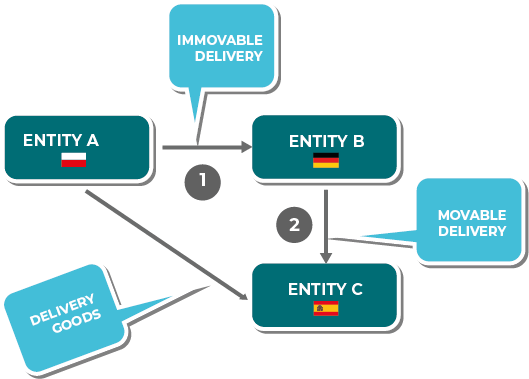
Polish company A sells goods to German company B. Company B sends the goods directly to Spanish company C. The transport is organized by company C.
In the example above, the movable delivery is the delivery from company B to company C.